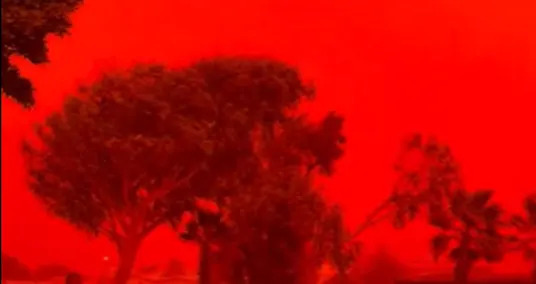
A massive dust storm, or haboob, swept across the Sahara Desert from western Algeria into Mauritania, Morocco, Western Sahara and the Canary Islands on March 30. The dust stretched for more than 1,000 miles.
As meteorologists observed the dust storm from space via weather satellites, social media users captured the incoming dust storm on camera. One video shows a thick wall of dust and sand moving toward a resident of the town of Tindouf, near the Mauritanian, Western Saharan and Moroccan borders.
How does the dust affect tropical storms in the Atlantic?
While this storm didn't make it too far off the coast, significant amounts of dust can drift westward from Africa across the Atlantic beginning in May. This can inhibit tropical storm formation, or the strengthening of an existing system, because the dusty air has about 50% less moisture than the typical tropical atmosphere.
Strong winds in the dust layer can also substantially increase the vertical wind shear in and around the storm environment, potentially disrupting any storm that forms.
LATEST POSTS
- 1
 Scientists may be overestimating the amount of microplastics in the environment – and the culprit is lab gloves
 - 2What loving-kindness meditation is and how to practice it in the new year
- 3Miley Cyrus details her fear of paper, says fiancé Maxx Morando opens their packages outside: 'That's really why I got engaged'
- 4The Most Rousing Ladies Business visionaries of Today
- 5West Antarctica’s history of rapid melting foretells sudden shifts in continent’s ‘catastrophic’ geology





- Bullets in Luigi Mangione’s bag convinced police that he was UnitedHealthcare CEO killing suspect
- One lightly wounded after Iranian missile barrage targets northern Israel
- The Manual for Well known rough terrain Vehicles
- A throat bone settles it - Nanotyrannus was not a juvenile T. rex
- Tech Patterns 2023: 12 Advancements to Keep an eye Out For
- Audits of Espresso Types: Which Mix Is for You?
- Archaeologists uncover details about the Hjortspring boat's origins
- 9 African migrants died in freezing temperatures near Morocco-Algeria border
- Cyclone Narelle turns Australian skies blood red in ‘apocalyptic’ scenes