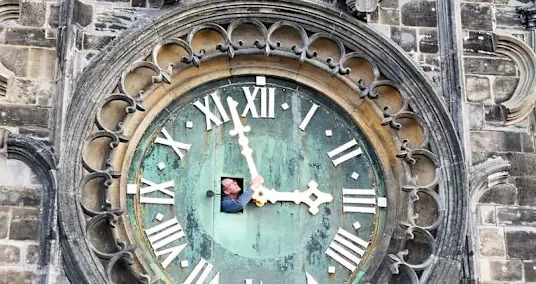
Clocks across the majority of European countries are set to go forward by one hour early on Sunday as the continent moves to daylight saving time, also known as summer time.
Clocks in most European nations including Germany advance by one hour at 2 am (0100 GMT) to 3 am, heralding longer evenings and brighter days.
This means that for the coming months parts of Europe will be on Central European Summer Time (CEST), before moving back to Central European Time (CET) in the autumn, when clocks go back again by an hour on October 25.
The aim of the change is to make better use of daylight in the shorter days of the winter in the northern hemisphere.
The signal for the automatic changeover of the clocks in Germany comes from the Federal Institute of Physics and Metrology (PTB) in the northern city of Braunschweig, also known as Brunswick in English.
The institute's experts ensure that radio-controlled clocks, station clocks and many industrial clocks are supplied with the signal via a long-wave transmitter called DCF77 in Mainflingen near Frankfurt.
LATEST POSTS
- 1
 Unwinding History's Secrets: Looking for the Response to Antiquated Human advancements
 - 2Why ordering takeout or calling the dog walker might lead to a happier relationship
- 3The World's Dazzling Regular Miracles
- 4Extravagance SUVs for Seniors: Solace, Innovation, and Security
- 5From White Elephant to Favorite Things parties, here are all the rules you need to know every kind of gift exchange


- Turkey key underlying issue as Israel, Greece, Cyprus hold summit
- Trump announces 'Patriot Games' with 2 competitors from every state and territory: What we know
- The secret appeal of Harlan Coben’s messy, addictive TV thrillers
- 'Every day I planned an escape': Ariel Cunio shares details of Hamas captivity
- German finance minister sees advantages of smartphones in schools
- Easy to understand Tech: Cell phones for Old in 2024
- Study reveals how fast weight returns after ending GLP-1 drugs
- Evaluated Smartwatches for Wellness Devotees
- 'Euphoria' Season 3 trailer includes Eric Dane's final appearance, Jacob Elordi and Sydney Sweeney at the altar and Rue's 'Breaking Bad' era